
What does an Oklahoma summer do to your car's interior?
A closed car parked in an open Oklahoma driveway in July runs well past 130°F inside, and that heat — combined with direct UV through the glass — is what dries and hazes a dashboard, stiffens and cracks leather, fades trim and bakes whatever is already on a surface into it. It ages an interior considerably faster than mileage does, which is why a six-year-old car in Tulsa often has a worse-looking cabin than a ten-year-old car somewhere mild.
Understanding the mechanism is useful, because it tells you which protective steps are worth doing and which are decoration.
What is actually happening in there?
Three separate processes, all running at once through the summer.
Thermal cycling. The cabin swings from roughly ambient overnight to 130°F-plus by mid-afternoon, every day, for four months. Plastics, vinyl and adhesives expand and contract through that range constantly, and the repeated movement is what produces the cracking you eventually see across the top of a dashboard and along door panel seams.
UV exposure. Automotive glass filters most UVB but far less UVA, and UVA is what breaks down the plasticizers that keep vinyl and dash material flexible. As those leach out the surface goes chalky, then brittle. That chalky look on an older dash is not dirt — it is the material itself degrading, and no cleaner reverses it.
Moisture loss from leather. Leather is a fibre structure that needs oils to stay supple. Heat drives them out. Once enough is gone the hide stiffens and the creases where you sit and slide across become permanent cracks, which is why the driver's seat bolster always fails first.
Why does a dashboard go hazy?
Two reasons and they compound.
Part of it is outgassing. Interior plastics release volatile compounds when hot, which condense on the inside of the windshield as a thin film. That is the haze you only see when the sun is low, and it is why the inside of the glass gets dirty in a car nobody eats in.
The other part is what has already been applied. Dressings that leave a heavy greasy shine sit on the surface, collect dust, and then bake in a 130°F cabin into a layer that is genuinely hard to remove. Most "my dash looks worse after I cleaned it" stories are this. A matte-finish product looks correct and does not turn into a problem in August.
Does a windshield sunshade actually help?
Yes, more than almost anything else you can do, and it is the cheapest item on the list. It does not stop the cabin getting hot — air temperature will climb regardless — but it stops direct radiation landing on the dashboard, the steering wheel and the top of the seats, and surface temperature there is what does the damage. A dash in direct sun runs dramatically hotter than the air around it.
Where you park matters as much. A garage is best; shade is a distant second but real. This is a genuine difference between neighborhoods in this metro. Midtown Tulsa's mature oak canopy is a meaningful advantage, while newer subdivisions in Broken Arrow have young trees and open sky, so those driveways take the full load from morning to evening.
What about the carpets?
Heat's effect here is indirect but it matters. A hot, dry cabin builds static across synthetic carpet, which grips dust and pet hair far harder than the same carpet in cooler months. That is why a vacuum that works in March seems useless in August.
Heat also drives odor out of anything in the fabric, which is why smells that sat unnoticed all winter become the thing you think about every morning in July. Nothing changed in the car — the temperature started doing the work.
What actually protects an interior?
In order of how much difference each makes:
- Park in shade or a garage
- Everything else is a distant second.
- Use a windshield sunshade
- Every time, not just on long stays.
- Clean and condition leather two to four times a year
- The conditioner replaces oils that heat drives out. Dirt left on leather is abrasive as well, so cleaning first is not optional.
- Use a matte, UV-protective dressing on the dash and trim
- Not a greasy shine — that bakes on and collects dust.
- Keep dust off
- Dust is mostly mineral and it is mildly abrasive, so every wipe across a dusty surface is a very light sanding.
- Deal with spills immediately
- A spill that dries into carpet padding through one Oklahoma summer is a shampoo-and-extraction job rather than a wipe.
When is the best time to have it detailed?
Spring and early fall, for two reasons. Going into summer, a cleaned and conditioned interior has the protection on it when the heat actually arrives — which is worth considerably more than applying it in September after the damage is done. And a car worked on at a sane temperature simply gets a better result, because products are not flashing off surfaces before they can be worked in.
That is not a reason to skip an August appointment if the car needs one. It is a reason to book the interior detail in April rather than intending to and getting to it in October. Miller Mobile Detailing works through the summer either way, and schedules those appointments earlier in the day, in shade wherever the driveway allows it.
The short version
Heat and UV, not mileage, are what age an interior in this state. Shade and a sunshade do most of the protecting. Conditioning leather and using a matte dressing on the dash does the rest. And anything already in the carpet will announce itself the first hot week, so the time to deal with it is before then.
Miller Mobile Detailing is an owner-operated mobile detailing business serving the Tulsa metro from Sapulpa, Oklahoma. For help with this, see interior detailing. Alex works throughout Broken Arrow and the rest of the metro. Call or text (918) 829-8189, or book a time online.
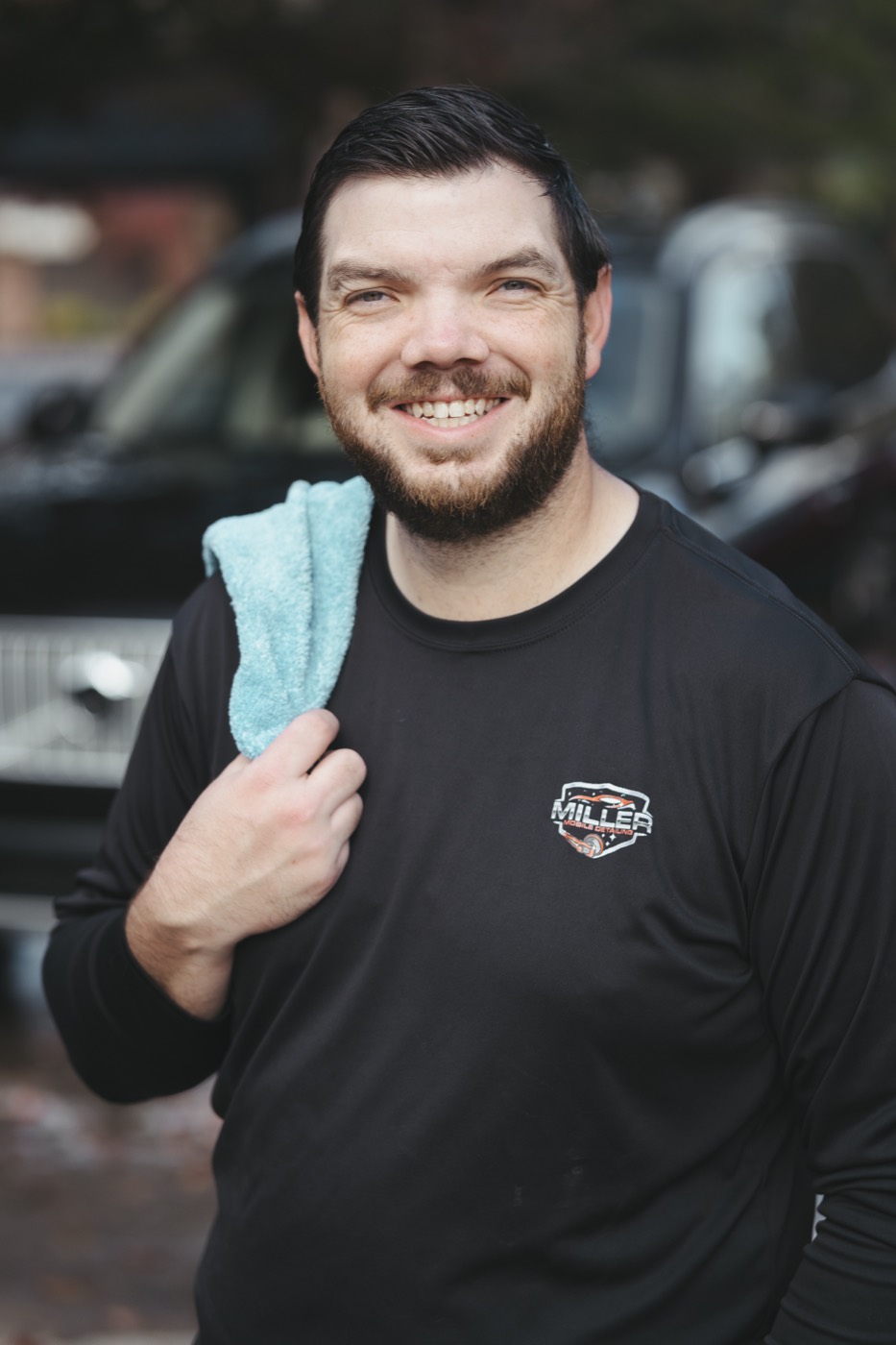
Alex Miller owns Miller Mobile Detailing and details every vehicle himself, across Tulsa, Sapulpa, Broken Arrow, Jenks, Bixby and the rest of the metro. The business is rated 5.0 from 81 Google reviews.